
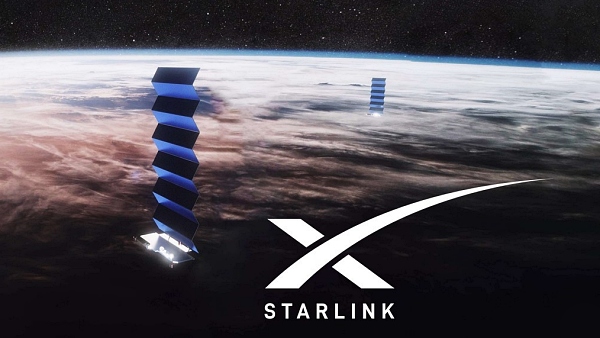
Starlink has established itself as a core source of profit in Elon Musk's business empire. More than 60 percent of SpaceX’s $18.6 billion revenue last year came from Starlink, and it was the company’s only profitable business, Business Insider reported on Monday.
Starlink provides service to 13 million people in more than 167 countries. SpaceX plans to launch tens of thousands of additional satellites to grow Starlink from a niche service focused on remote areas into a global wireless communications and broadband provider. The service is not only a revenue source but also a tool for expanding Musk’s global influence.
That influence has been particularly evident on the battlefield in Ukraine. Ukrainian forces have used Starlink as a communications network that is not easily shaken by Russian jamming, and they have relied on it for drone operations and real-time target adjustments. At the same time, concerns have grown that battlefield communications could hinge on the judgment of a private company’s CEO.
Musk has said he rejected a request in 2023 to activate Starlink to support an attack on Crimea. He said at the time he was concerned that SpaceX would become explicitly involved in a major act of war. In February this year, after a request from Ukraine’s defence minister at the time, he blocked the Russian military’s illegal use of Starlink, and the move caused major disruption for Russian forces. Ukraine is also preparing other battlefield communications options in case of Musk’s decisions or direct Russian attacks.
SpaceX is also expanding Starlink into aviation and mobile communications. More than 40 airlines have adopted Starlink-based in-flight WiFi, and SpaceX has also signalled a full-scale push to expand mobile services aimed at AT&T, Verizon and T-Mobile. For that, it submitted to regulators a plan to launch 100,000 V3 Starlink satellites. Some point out that low-Earth orbit satellite networks are strong in rural and remote areas but may be less efficient in big cities.
As global expansion accelerates, Musk’s geopolitical influence is also growing. Taiwan changed foreign ownership rules that had blocked talks with SpaceX in July, and in India the service launch was delayed amid geopolitical concerns. Alessio Terzi of the Bennett Institute for Public Policy at the University of Cambridge pointed out that governments could be exposed to the risk of striking a Faustian deal with Musk.
Starlink has shown competitiveness beyond simple satellite internet by demonstrating military communications, in-flight WiFi and the potential to expand into mobile services. At the same time, some point out that the wider the service spreads, the clearer it becomes that influence over communications infrastructure is concentrated in a specific company and executive.
 Hyunwoo Chu
cookinpapa@d-today.co.kr
Hyunwoo Chu
cookinpapa@d-today.co.kr