
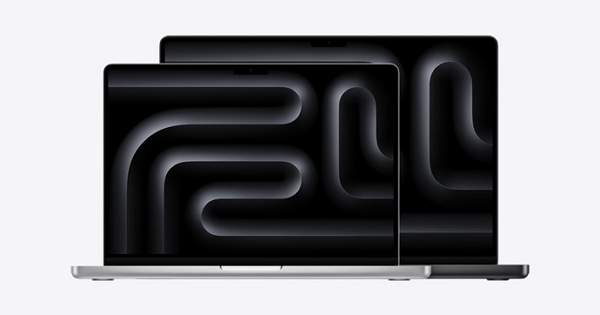
[Digital Today reporter Jinju Hong (홍진주)] Apple is increasingly likely to apply an OLED display and a touchscreen at the same time to its next MacBook Pro. Signs supporting touch input have repeatedly been found in a recent macOS beta. Forecasts that the new MacBook Pro will be thinner and lighter than existing models have also emerged, raising expectations of a major design change.
On Oct. 5 (local time), 9to5Mac and TechRadar reported that macOS 27.2 beta 3 added code and animations in various default Apple apps premised on touch input. The Photos app was found to include code that recognises a touch standby gesture, and the Notes app had a function that detects touch presses. Traces aimed at supporting touch detection and drag were also spotted in Safari and Quick Look.
A new animation related to long press was also confirmed in the Dock. Since this is a feature more useful in a touch environment than with a mouse or trackpad, analysis has emerged that it is a change made with a next-generation touchscreen Mac in mind.
Apple has gradually expanded the groundwork for touch support in macOS 27 as well. It added a pull-to-refresh gesture to the operating system and supported touch input in Sidecar, which uses an iPad as a secondary display for a Mac. With recent changes accumulating, there is an assessment that the boundary between Mac and iPad input methods is gradually narrowing.
Hardware changes are also significant. Bloomberg's Mark Gurman (마크 거먼) said Apple is redesigning the internal structure of the next MacBook Pro and miniaturising components to make the product much thinner and lighter. The possibility has been raised that it will boost portability by not only adopting an OLED panel but also adjusting internal component placement.
The new MacBook Pro is expected to come with an OLED display and touchscreen together. The possibility of using the M5 Pro and M5 Max chips is also being discussed, and the release is widely expected to be late this month or in November.
Still, as the product becomes thinner, concerns are also being raised about the battery and connectivity. Since the MacBook Pro is a professional product, battery life and a variety of ports are important, and users could push back if these elements are sacrificed in the process of reducing thickness and weight. Price could also rise sharply as OLED and a new design are applied, adding another variable.
If the changes materialise, Apple could also alter the long-maintained division of roles between the Mac and iPad. With macOS itself beginning to actively support touch input, attention is focused on the possibility that the next MacBook Pro could become the first MacBook Pro in which input methods and overall product design change, going beyond a simple display replacement.
macOS 27.2 beta 3 introduces a new long-press animation for Dock icons, hinting at the upcoming touchscreen MacBook Pro https://t.co/4zfZOxy8MO
 Jinju Hong
hongjj@d-today.co.kr
Jinju Hong
hongjj@d-today.co.kr